


Perfect Yorkshire Puddings:
- ruehite
- Dec 22, 2025
- 7 min read
Crispy, Golden, and Actually Flavorful

Before my trip to London last year, I'd never even heard of Yorkshire puddings.
When they finally arrived at my table during my first Sunday roast, I was confused - were they bread? Pastry? Some kind of savory pancake?
One bite answered all my questions: they're crispy, eggy, golden perfection designed specifically to soak up gravy. I was immediately obsessed.

But here's the thing - while the Yorkshire puddings I had in London were technically perfect (tall, crispy, with that signature hollow center), they lacked one crucial element: flavor.
They were quite bland, almost no seasoning.
As someone who was raised by two parents with Southern roots, I knew I had to make a version that honored the British tradition but also well-seasoned.
This recipe gives you tall, dramatic, golden Yorkshire puddings with actual flavor.
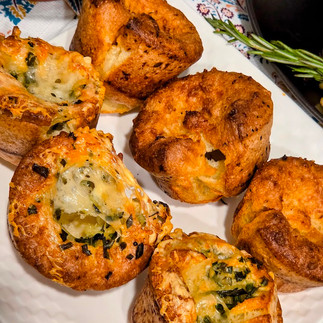
And because I can never leave well enough alone, I'm also sharing my elevated version with fresh chives and gruyere cheese that takes these from classic to extraordinary.
The Science Behind the Puff
Yorkshire puddings are all about steam and structure.
When that cold batter hits screaming hot fat in a blazing hot oven, the liquid turns to steam, the eggs provide structure, and magic happens.
They puff up dramatically, creating crispy edges and that signature hollow center perfect for holding gravy.
The key to success? Hot fat, hot oven, cold batter, and NO PEEKING.


Prep Time: 5 minutes (plus resting time)
Cook Time: 20-25 minutes
Total Time: 30 minutes (plus resting)
Makes: 12 puddings in a muffin tin OR 6 in a popover pan
Ingredients
For the Batter
3 large eggs, at room temperature
3/4 cup whole milk (cold from the fridge)
1 cup all-purpose flour
1.5 teaspoon Pink Himalayan Sea salt (don't skip this!)
1 teaspoon sugar (for balance)
1/2 teaspoon black pepper
Optional: 1/4 teaspoon garlic powder for extra flavor
For Cooking
1/3 cup fat total (chicken drippings, beef drippings, or vegetable oil)
For muffin tin: about 1 teaspoon per cup
For popover pan: about 1 1/2 teaspoons per cup
For Chive & Gruyere Variation (Optional)
2 tablespoons fresh chives, finely chopped
1/3 cup gruyere cheese, finely shredded
Instructions
Step 1: Make the Batter (Do This First!)
IMPORTANT: Yorkshire pudding batter needs to rest for at least 30 minutes, but preferably 2+ hours or even overnight in the fridge. This allows the flour to fully hydrate and the gluten to relax, which gives you better rise and texture.
In a large bowl, whisk the eggs until frothy. Add the half of the milk and whisk until combined.
In a separate bowl, combine the flour, salt, sugar, pepper, and garlic powder (if using). Whisk until all dry ingredients are fully mixed.
Slowly add dry ingredients into bowl with wet ingredients until fully combined. Once all dry ingredients are incorporated, add remaining milk into the bowl little by little.
Whisk until you have a smooth batter about the consistency between heavy cream and pancake patter. It should be completely lump-free.
Pro tip: For the smoothest batter, use a blender! Just blend everything for 30 seconds.
Cover and refrigerate for at least 30 minutes, ideally 2-4 hours, or up to overnight. Give it a good stir before using.
Step 2: Preheat Everything (This is CRUCIAL!)
Place your oven rack in the upper-middle position. Preheat your oven to 450°F (230°C). Yes, that hot. Don't second-guess it.
Add your fat to your muffin tin or popover pan:
Muffin tin: 1 teaspoon fat per cup
Popover pan: 1 1/2 teaspoons fat per cup
Place the pan with the fat in the preheating oven for 10 minutes. The fat needs to be smoking hot - literally shimmering and almost smoking.
Step 3: Work Fast and Don't Peek
Remove your batter from the fridge - you want it COLD when it hits that hot fat.
Carefully remove the pan from the oven (it will be extremely hot). Working quickly, pour the batter into each cup, filling them about 1/2 full.
The technique: I like to use a small ladle or measuring cup with a spout for control. Pour confidently - the batter should sizzle when it hits the fat.
For Chive & Gruyere Version: After vessels are filled, top each cup with the chopped chives and shredded gruyere right before baking.
Immediately return the pan to the oven. Close the door. DO NOT OPEN THE OVEN FOR 20 MINUTES. I'm serious. Not even a peek. The temperature drop will cause them to deflate.
Step 4: Bake to Golden Perfection
Bake for 22-28 minutes until the Yorkshire puddings are:
Tall and dramatically puffed
Deep golden brown
Crispy on the edges
Set in the center (no raw batter)
Muffin tin: Usually done in 20-22 minutes Popover pan: May need 23-28 minutes due to larger size
They should be deeply golden - don't underbake them or they'll collapse when you take them out. Turn on your oven light and look through the window for signs that they are done.
Step 5: Serve Immediately
Remove from the oven and serve RIGHT AWAY. Yorkshire puddings are at their absolute best fresh from the oven. They'll stay crispy for about 15-20 minutes but will gradually soften as they cool.
Serve alongside roasted chicken, crispy potatoes, plenty of gravy, and the rest of your Sunday roast.




Tips for Yorkshire Pudding Success
Temperature is Everything: Hot fat + hot oven + cold batter = maximum puff. This is non-negotiable.
Don't Open the Oven: I know it's tempting to check on them, but opening the oven door releases heat and steam, which will cause them to deflate. Trust the process.
Matters: Chicken or beef drippings give the best flavor (and are traditional), but vegetable oil works perfectly fine and gets just as crispy. I use chicken drippings from my roasted chicken - it adds incredible flavor.
Room for Growth: Only fill cups 1/2 full. They need room to puff up and over the edges.
Seasoning is Key: Traditional British Yorkshire puddings are often underseasoned. I use a 3/4 teaspoon of salt and pepper because that's how I cook - with bold, confident flavors. You can adjust to taste, but don't skip the salt entirely.
The Resting Time: Don't skip letting the batter rest! It makes a huge difference in texture and rise.
Pan Choice: Popover pans will give you taller, more dramatic puddings. Muffin tins give you slightly shorter but equally delicious ones with more surface area for crispy bits. Both work beautifully!
Troubleshooting
They didn't rise: Fat or oven wasn't hot enough, or you opened the oven too early.
They rose but deflated: Underbaked. They need to be deeply golden and fully set before you remove them.
They're tough or chewy: Overmixed the batter or baked too long.
They stuck to the pan: Not enough fat, or the fat wasn't hot enough.
Avoid overfilling the baking tins: Doing so will result in them being very dense and not rising as much.
The British Tradition
Yorkshire puddings originated in Yorkshire, England (shocking, I know) in the 18th century.
They were originally served before the main course with gravy to fill people up, making the expensive meat go further. Over time, they became part of the main meal itself, especially with Sunday roast beef.
Today, Yorkshire puddings are an absolute must-have for any proper Sunday roast. In fact, many British people would argue it's not a real Sunday roast without them.
They're meant to catch and soak up all that delicious gravy, which is why that hollow center is so important.



Elevated Chive & Gruyere Version
This variation is perfect for:
Special occasions when you want something extra
Dinner parties where you want to show off a bit
Anyone who loves the combination of eggs, cheese, and herbs
When you're already going all-out on Sunday roast and want EVERYTHING to be special
The gruyere adds nutty, complex flavor and creates little pockets of melted cheese throughout. The chives add freshness and a subtle onion note that complements the rich gravy. Together, they transform Yorkshire puddings from a vessel for gravy into a star side dish in their own right.
Just remember: add the chives and cheese to the batter right before baking, after it's rested. This keeps the chives fresh and bright.
Make-Ahead Tips
The Batter: Make it the night before and keep it in the fridge. This is actually ideal! Just give it a good stir before using.
Can You Reheat Them? Technically yes, but they're never quite the same. If you must reheat, do it in a 400°F oven for 5 minutes. They'll crisp back up a bit but won't be as tall and dramatic. And honestly, I re-heated in the microwave and it turned them into a decent dinner roll.
Can You Freeze Them? You can freeze baked Yorkshire puddings for up to 1 month. Reheat from frozen in a 400°F oven for 8-10 minutes. Again, not quite as perfect as fresh, but still tasty.
Serving Suggestions
Yorkshire puddings are traditionally served:
Alongside roast beef, chicken, lamb, or pork
Covered in gravy (this is mandatory!)
As part of a full Sunday roast spread
But they're also delicious:
For breakfast with eggs and sausage
As a base for mini pot pies
Filled with creamed mushrooms for a vegetarian main
With butter and jam (controversial but some people love it!)
Pairing with Your Sunday Roast
These Yorkshire puddings complete your Sunday roast:
Full menu and Sunday roast story: My First Sunday Roast

Why This Recipe Works
This recipe gives you the traditional tall, puffy, crispy Yorkshire puddings that are essential to Sunday roast, but with actual flavor.
The rested batter gives you better structure. The cold batter hitting hot fat creates maximum steam for maximum puff. The high oven temperature sets the outside quickly while the inside stays soft.
And the seasoning? That's what makes these special. They're still perfect vehicles for gravy, but they're also delicious on their own.
That's the Rue's Global Kitchen approach - honoring traditions while bringing bold, confident flavors to treat the palate.
Have you made Yorkshire puddings before? Are you team traditional or team cheese-and-chives? Let me know in the comments!
Want more recipes from my travels? Subscribe to Rue's Global Kitchen for weekly recipes and stories from around the world.


Comments